
The Oral Health Risks of Skipping Regular Dental Visits
Negative Effects of Skipping Dental Checkups
You may think that skipping dental checkups here and there isn’t a problem, but dental checkups are essential for maintaining good oral health. We understand how busy you are, or that you may have dental anxiety, and that you may assume that brushing and flossing alone will be enough. But avoiding visits to the dentist can lead to serious consequences for your teeth, gums, and overall well-being.
At Hamby Family Dental Center, we provide thorough checkups to help you prevent problems and address minor dental issues before they escalate. This article discusses the negative effects that can occur when you skip dental checkups.
The Importance of Regular Dental Checkups
Regular dental visits catch minor issues before they become major, expensive problems. Issues like small cavities that aren’t caught in a dental exam become larger, more painful cavities that are more expensive to repair. Prevention is key to keeping dental issues at bay and manageable. The hidden dangers of skipping dental checkups include serious problems like early gum disease and tooth decay, which often cause no pain until they are advanced.
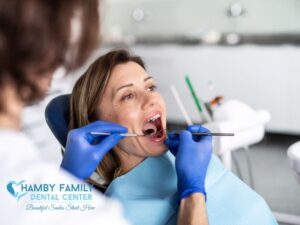 The American Dental Association (ADA) stresses that routine cleanings (typically twice yearly) are a critical component of preventative dental care that helps maintain overall health, complementing daily at-home hygiene practices. Getting regularly scheduled dental checkups prevents costly major issues like tooth decay and gum disease. Dental checkups provide professional cleaning to remove hidden plaque and crucial oral cancer screenings. These maintain overall health, save money long-term, and protect your smile. Dentists see problems like gingivitis or jaw joint issues early, so they can prevent them from becoming irreversible or requiring extensive, costly treatments.
Consequences of Not Getting Regular Dental Checkups
Skipping regular dental checkups allows plaque and tartar to accumulate, which leads to cavities, gum disease, bad breath, and serious systemic health issues like heart disease, diabetes, and respiratory infections. These outcomes result in more painful, complex, and expensive treatments later.
Oral Health Consequences
- Plaque and Tartar Buildup: Even when you diligently brush and floss, it’s impossible to remove all the plaque that forms on your teeth. Over time, plaque can harden into tartar, a substance that can only be removed by a dentist or dental hygienist. If left to accumulate, plaque and tartar buildup can lead to a host of dental problems, including tooth decay, gum disease, and bad breath. When plaque isn’t removed, it hardens into tartar, eroding enamel and creating cavities that can require fillings, root canals, or extractions. Removing plaque in a routine dental exam eliminates the possibility of tartar causing damage. For more information on plaque and tartar, read our article on “Plaque vs. Tartar.”
- Cavities and Decay: You get cavities because bacteria in your mouth feed on sugars, producing acid that erodes enamel, and skipping checkups means early decay goes unnoticed, allowing it to worsen. Factors like diet, dry mouth (less saliva to wash away bacteria), genetics, and even transferred bacteria from others play huge roles, making professional cleaning and early detection crucial. Regular dental visits catch small issues (like weak enamel or hidden plaque) before they become painful holes, which is why good hygiene isn’t always enough.
- Gum Disease: When tartar isn’t removed, and it is allowed to harden, it can cause inflammation in your gums. Inflammation, called gingivitis, progresses to periodontitis, causing gums to recede, teeth to loosen, and potentially leading to bone and tooth loss. For more information, see our article “Tips to Avoiding Gum Disease.”
- Bad Breath: Bad breath, called halitosis, can be caused by bacteria and infections in the mouth.
- Infection and Loss of Teeth: A severe consequence of avoiding the dentist is tooth loss. As cavities and gum disease progress, they can weaken the structure of the teeth and the supporting bone. If left untreated, this can result in the loss of one or more teeth. Losing teeth can affect your ability to chew, speak, and smile confidently.
- Jaw Pain: Inflammation and shifting teeth can lead to temporomandibular joint (TMJ) issues.
- Oral Cancer Risk: One of the most critical reasons to visit the dentist regularly is the early detection of oral cancer. Dentists are trained to look for signs of oral cancer during routine checkups, and early detection is key to successful treatment. Oral cancer can develop in the mouth, throat, tongue, or gums and may not cause noticeable symptoms in its early stages.
Overall Health Risks
These are some of the health risks you take when you skip dental exams. For more information about the link between your dental health and your overall health, read our article “The Link Between Your Oral Health and Your Overall Health.”
- Systemic Infections: When you have severe gum infections, bacteria can enter the bloodstream and affect other parts of the body.
- Heart Disease: Poor oral health is linked to an increased risk of heart problems.
- Diabetes Complications: Gum disease can make blood sugar control more difficult.
- Respiratory Issues: Bacteria from your mouth can travel to the lungs, increasing the risk of infections.
- Oral Cancer: Part of routine dental checkups includes screening for early signs of oral cancer.
Costly and Invasive Treatments
A significant long-term consequence of avoiding the dentist is the potential for costly and invasive treatments. Small problems like cavities or gum inflammation can easily be treated during regular dental checkups. However, if these issues are ignored, they can progress into more severe conditions that require extensive treatments such as root canals, extractions, or even surgeries.
What Happens During a Checkup
A dental checkup includes the following:
- An Initial Conversation: During the first part of the exam, you have a conversation with either the dental assistant or the dentist to inform them of how things are going with your oral hygiene, any trouble spots you have noticed (like bleeding gums, dry mouth, or pain), and any updates to your health.
- An Examination: During the exam, the dental professional checks teeth for decay, damage, or bite issues.
- Cleaning: Removing plaque and tartar is one of the main tasks in the exam.
- X-rays: X-rays show what is beneath the surface of teeth and gums.
- Screenings: Checking gums, neck, and jaw for abnormalities is an important part of the exam.
- Providing Guidance: Discussing oral hygiene habits and risks guides you to better dental care.
Contact Hamby Family Dental Center to Schedule Your Regular Dental Checkups
Our professional team at Hamby Family Dental Center can clean the plaque and tartar off your teeth in a regular bi-annual checkup, and we can properly diagnose any dental and oral issues from plaque buildup you may be experiencing. Our main goal is to keep you comfortable and healthy. Don’t skip your regular dental checkups. Contact us today to schedule a cleaning or other appointment by calling 919-552-2431 or completing the form below.